Help Crewmembers Find More than One Place on the Team

The paver operator runs the paver. Check.

The roller operator runs the roller. Check.

Of course these members of the crew have more complex jobs than what’s stated right there. And of course there are many members of the crew who will cross-train so they can fill in for one another, help one another, and create a well-rounded, skilled team in the field. As a member of management, you can help vital crewmembers find the places—plural—where they excel on the team.

As always, start with safety. Look for crewmembers who take safety seriously. These are the members of the team who are more likely to handle responsibility well.

Then take a look at job descriptions. In the “Off the Mat” department of AsphaltPro magazine, Lorraine D’Angelo has offered suggestions for companies that need to update employee handbooks, and that includes spelling out job descriptions for workers. The paver operator’s job description includes, but is not limited to, running the paver while matching the plant’s production.

For instance, he will try to operate the paver in a straight line to make longitudinal joint matching and density easier to achieve. He’ll work with the dump man to get material to flow from the haul truck in a uniform manner without segregation.

As the crewmember with the highest vantage point, the paver operator can assist the foreman on large jobs, or may function as the foreman on smaller crews.

On may crews, it’s vital that the crewmembers are cross-trained. Consider this: It’s the last day of what could be a lucrative paving job for your company. The striping crew is scheduled to arrive at 2 p.m. so you can open the property to the client’s customers by evening and send the invoice for final payment. Sounds great until you learn the paver operator and breakdown roller operator are out with the same flu bug. If you have cross-trained your crewmembers, you can pull someone from another machine and get started on the day.

Training one person to do one area of paving limits your success. Make sure your team members are not only aware of one another’s duties, but are able to assist one another and fill in when needed.

Use rainy days to cross-train, teach new skills and reinforce existing skill sets. Use morning startup and evening shutdown when employees are inspecting, cleaning and fueling equipment to share knowledge. Communication should be about the job, the skills to get the job done, the equipment in front of them, safety tips, etc., not about basketball games or gossip. Employees are still on the clock and are still part of a team that should be working toward improving quality and each other.

Asphalt Paving 101 goes in-depth to help paving crews deliver a top quality job. When you purchase the course, you get immediate lifetime access to it on any device at any time, and you can use it to train any number of paving crew members any number of times necessary. To make the course yours, all you do is click the green “enroll” button here.


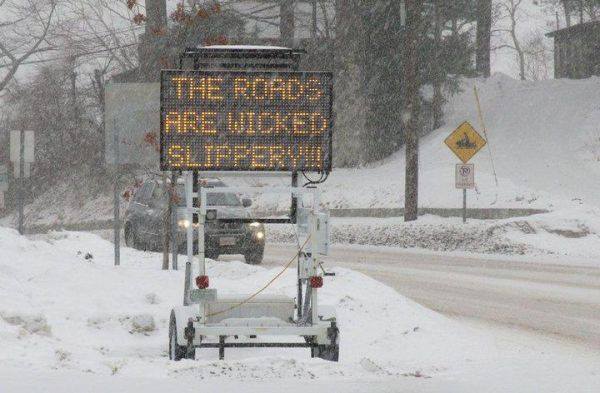
Asphalt Humor: Winter 2017/2018

Roller Maintenance Tips

This month, the toolbox tips focus on equipment maintenance. This week, we look behind the paver at the machine most responsible for compaction, density and pay. Let’s look at what roller operators can do to ensure optimum densities this spring.

By taking extra time this winter to clean and shore up the rollers in your fleet, you invest in the paving season’s success.

The online training course we offer gives an in-depth look at roller maintenance, but let’s look directly at the drums for a moment right now.

Make sure the roller operators and mechanic working on the rollers this winter check for worn coco mats, worn rubber, broken springs and/or broken scraper bars. This is the ideal time to replace such things. Maybe you need to repair nozzles on the water spray system that lubricates the drums. Open the water tank and clean the filters.

Adding lights now gives extra nighttime paving safety and visibility to your worker later. Maybe you need to replace the fuel tank cap or something else that’s simple now, but could be a nightmare later. Whatever the point of concern, now is the time to address it.

Take a good look at the roller’s drums. You’re looking for divots in the surface of the metal. If you see gashes or gouges, you know those will translate into missed areas of compaction in your asphalt mat. Your mechanic probably cannot weld smoothly enough to return the drum to perfect working condition. You will either remove it and send it to the OEM for repair, or, if the gash is deeper than the metal, you may have to order a new drum altogether. When in doubt, check with the OEM about components and flaws. Take time now to care for this vital machine in your fleet so your roller is ready for start-up in the spring

The World is Our Oyster

In the 1980s, the new wave band Frankie Goes to Hollywood released an album with its second track titled “The World is My Oyster.” The song is all of one minute long, but has been sampled in a variety of decadently-indulgent remixes—including Frankie’s own works—that this editor and child of the ’80s finds “groovy.”

Why should I bring a 34-year-old musical aside to the beginning of the World of Asphalt/Agg1 2018 edition of an asphalt industry publication? Because the oyster sits before us right now with a big, fat pearl of opportunity inside.

The Association of Equipment Manufacturers (AEM) practically wrote this column for me when they reported 10 predictions for infrastructure development and growth after the State of the Union address. The trends they highlighted stem from optimism and a positive outlook. The industry is abuzz with energy and forward momentum.

Take a look at the positive trends AEM believes TRC Companies—an engineering, environmental consulting and construction management services firm—has got right on the money.

First, AEM and TRC believe “[i]nfrastructure spending will intensify as a result of comprehensive federal infrastructure legislation potentially bankrolling projects both big and small across the entire country.”

Second, they believe “[s]tates will rely on alternative approaches to planning and construction to pay for their projects. This could include more design/build transportation projects or more public-private partnerships.”

They anticipate trends toward greater renewable sources of energy and higher priority for energy storage, as well as a push for smart grids from utilities and regulators. You can check out the article “Vary Energy Use” in the January issue for some tips on that concept.

An unsettling trend they reported, and which our industry has been trying to cut off at the pass, pertains to the labor pool. “There will be a boom in projects in some states that will prompt labor shortages across the board. This will, in turn, lead to delays for many companies if they don’t plan for this challenge.”

Also watch for “[t]echnological advancements [that] lead to increased air quality monitoring.”

It’s apparent the asphalt industry has a busy season coming up. This is the time to invest in employee development, safety training, equipment, components, innovations, and the business elements that will catapult you to the front of the bidding line.

Carpe diem. No grit, no pearl. Shuck the oyster.

Stay Safe,
Sandy Lender

Retain What You Train

For the past two months, the majority of our industry has been engaged in “upkeep” to prepare for construction season 2018.

That upkeep includes training personnel, and there’s precious little time left to teach basic concepts and new technologies to workers before spring startup is upon us. To get more of those concepts and technologies to stay with workers after training sessions, you may want to try new teaching methods.

It’s no secret that different students learn in different ways and at different speeds. But a host of college prep sites and psychology studies show there are some common denominators for retaining what you learn. First, they suggest students—our workers—talk about what they’re learning, and talk about it right away.

An education blogger, Marianne Stenger, wrote for OpenColleges that “[d]iscussing what you’ve learned, whether immediately or a few days down the line, is important because it forces you to actively process the material…whenever possible, try to participate in group discussion where you’ll have the opportunity to go over the material you’ve learned, gain new perspectives and discuss any potential misunderstandings.”

Ameritech College of Healthcare has a list of methods that help college students retain info, and No.1 on the list was teaching the information to another person. By explaining a concept to someone else, you have to truly understand it yourself.

PsychoTactics.com stated “learners” retain about 90 percent of what they learn when they immediately turn around and teach it to someone else.

This is why we encourage companies to use the Asphalt Paving 101 online course in a group setting. Get everyone to talking.

Whatever program you use for your crew training, make sure there’s time for crewmembers to talk about it. Give crewmembers time to teach one another some aspect that they’re learning. Of course, the training director will want to monitor that to be sure everyone understands their material correctly, but this is a great way to build the team in more than concepts and techniques.

I’ve paraphrased the rest of the list of learning-retention methods from Ameritech College of Healthcare here:

  • Learn/train during the time when you are most alert. This means you get in tune with the times of day when you’re at your best.
  • Focus on one topic at a time. This means multi-tasking isn’t always the best option when trying to learn something new.
  • Take time to learn bits and pieces, rather than rushing through reams of material.
  • Write down notes. The tactile experience will help you kick different parts of your brain into gear. You can also read aloud or repeat a concept out loud—see method #1 above—to engage a different part of your brain.
  • Personalize what you’re hearing/learning to make it more interesting to you and easier to remember.

This time of year is the perfect opportunity to get more ideas for quality production and paving into workers’ routines for the upcoming season. Make sure they can retain what you train.

Asphalt History: March 2018

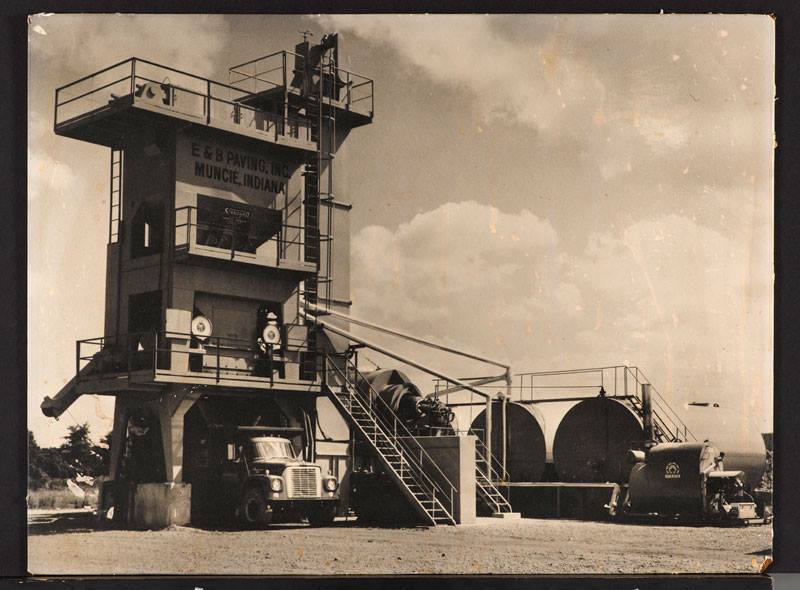
This photo from 1967 is of E&B Paving Inc’s first plant in Muncie, Indiana. What did your ’60s-era plant look like?

Did you know that asphalt roads are older than Jesus? The first road to be paved with asphalt was in Babylon between 625 and 604 B.C.! Now that’s a throwWAYback Thursday!
Bridge

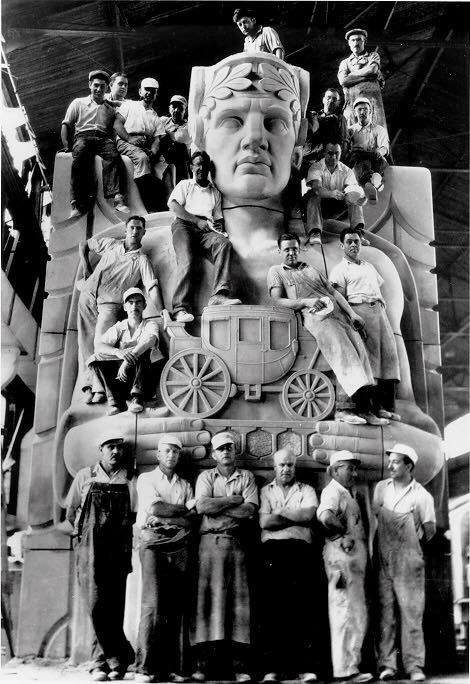
Did you know that Hope Memorial Bridge in Cleveland has four of these 43-foot-tall statues, called the Guardians of Transportation, lining its sides? How cool is that!

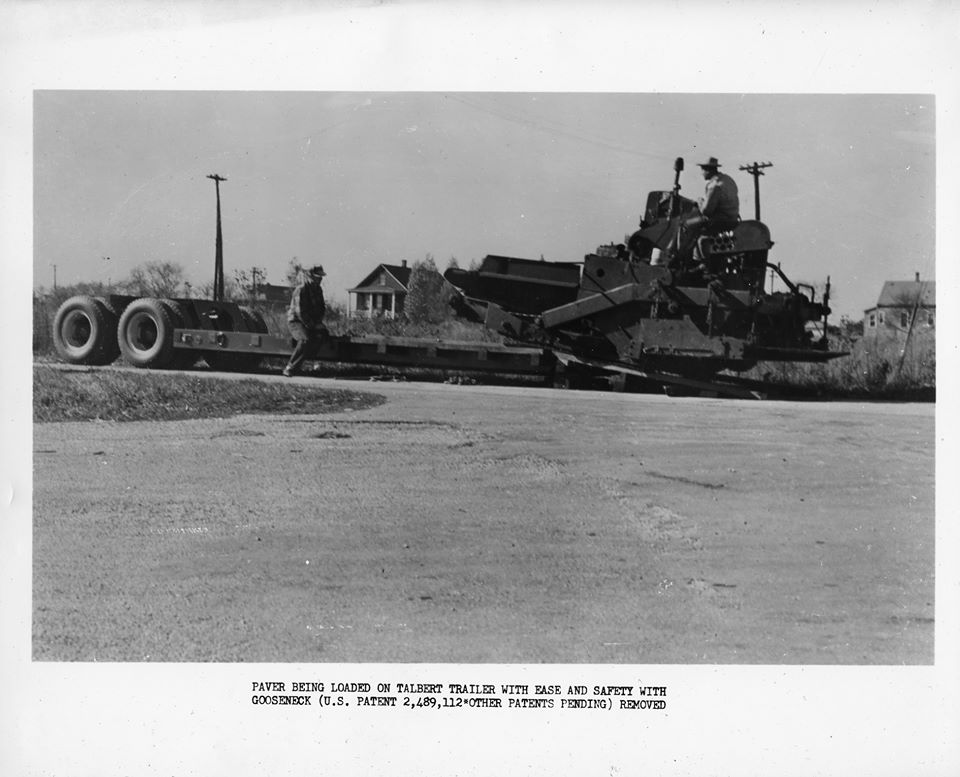
November 2017 was the 70th anniversary of the mechanical gooseneck! Check out the first one, patented by Austin Talbert at Talbert Manufacturing, Inc., back in 1947!