
Sep 21, 2026
Pavement Maintenance and Preservation Detail: Prep Your Sealcoat Material
BY AsphaltPro Staff
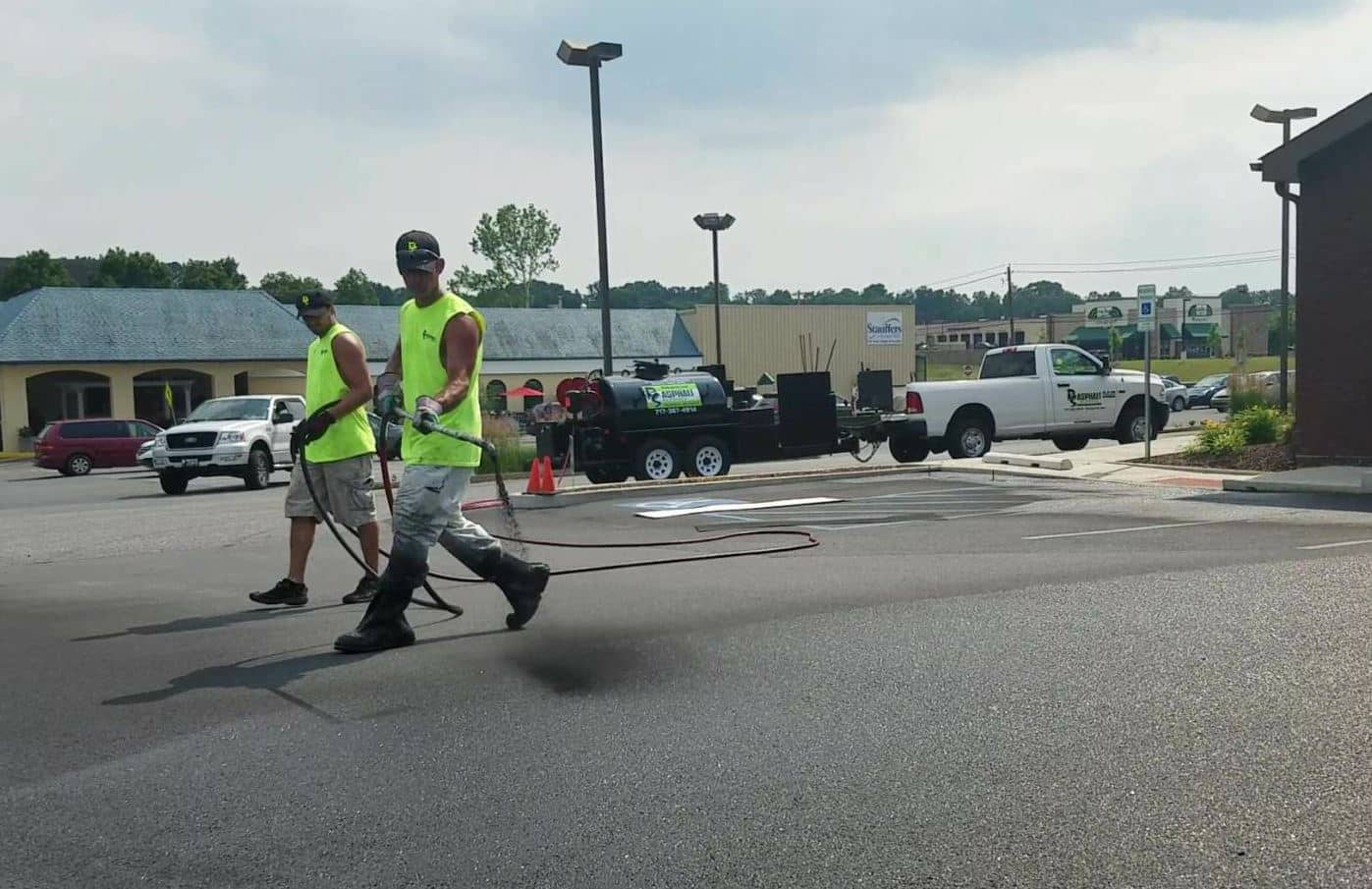
To perform pavement treatments such as sealcoats, you need warm enough ambient and ground temperatures (and sunshine, of course) for the material to cure properly. If the day promises sun and ambient temperatures above 48 or 50 degrees, it’s time to get to work. You can check with your sealant material provider for its specific working temperature suggestions.
Beyond temperature, you’re looking at the condition of the material itself. One of the reasons you’ll mix the sealer and sand prior to each individual job is to avoid it settling in the working tank. Here are the steps to make your sealant with good friction properties.
Step 1. Pump the concentrated sealer from the holding tank to the working tank on your trailer.
Step 2. Add water at a ratio of about 15% and mix thoroughly.
Step 3. Start adding sand at about 4 to 5 pounds per gallon of sealant with the tank’s agitator turning at 8 revolutions per minute.
Step 4. With the sand in suspension, you can reduce the revolutions to 4 per minute.
If you’ll be using the sealer for more than one day, you don’t have to leave the agitator on overnight, but you will want to start it up the next morning for about 20 minutes prior to pumping material into a sprayer. The sand that is in suspension won’t stay that way for days on end. Once the sand settles, the agitator can get stuck, and you’ll have a mess for the mechanic to clean.
More pavement maintenance and preservation guidance can be found in the PreservationPro supplement, available three times a year within The Asphalt Pro. The most recent edition is available now, at this link: Preservation Pro Archives | AsphaltPro Magazine